
Cookie consent: when do you need to ask first?
An “Accept all” banner doesn't always cut it. Here is what Quebec law says and how to sort your cookies.
A cookie is a small piece of data a website stores in the browser to remember a session, a preference or a behaviour. In Quebec, cookies that let a business identify, locate or profile someone must be disclosed beforehand and stay switched off until the person turns them on. Strictly functional cookies are simply explained in the privacy policy.
30 days free, no credit card.
In short
- Session cookies end with the browser session; persistent cookies last until a set date.
- Section 8.1: inform people before using technology that can identify, locate or profile them.
- Section 9.1's privacy-by-default rule expressly excludes browser cookie settings.
- Federal guidance says tracking people who cannot decline is not acceptable.
What is a cookie, technically?
MDN describes a cookie as a small piece of data a server sends to the user's browser. The server sets it with a Set-Cookie header, the browser stores it and sends it back on later requests to the same server, which lets an otherwise stateless protocol remember a login or a cart [1]. The Secure attribute keeps a cookie on HTTPS only, HttpOnly hides it from JavaScript, and SameSite controls whether it travels on requests coming from other sites [1].
The Office of the Privacy Commissioner of Canada adds the history: cookies were invented in 1994 so information could be saved between visits, and third parties such as ad companies soon started setting their own, which lets them link visits across sites and build profiles [3].
| Family | Typical lifespan | Example use | Identifies or profiles? |
|---|---|---|---|
| Session (strictly necessary) | Session | Keep a customer logged in to a portal | Usually not |
| Preference | Persistent | Remember the chosen language | Usually not |
| Audience measurement | Persistent | Count visits and page views | Depends on the tool |
| Advertising or tracking | Persistent | Follow someone across sites to target ads | Usually yes |
Rough guide only: what a cookie actually does, not what it's called, decides the obligations.
What does Quebec law say about cookies?
Quebec's Act respecting the protection of personal information in the private sector never mentions banners. Section 8.1 targets any technology with functions that can identify, locate or profile the person: the business must first tell them it uses that technology and how they can activate those functions. Profiling means collecting and using personal information to assess someone's characteristics, such as preferences, interests or behaviour [2].
One detail surprises people. Section 9.1 requires technology products to ship with the highest privacy settings by default, but it expressly excludes privacy settings for browser cookies [2]. For profiling cookies, the obligation flows through section 8.1 instead: tell people first, and let them switch the function on.
Federal guidance points the same way. The OPC's online behavioural advertising guidelines say people must be told about tracking at or before collection, must be able to opt out easily, and that technology people cannot decline, such as zombie cookies or device fingerprinting, should not be used for that purpose [4].
What does a small business's cookie inventory look like?
How do you design an honest cookie banner?
- Give “Accept” and “Decline” equal weight and equal size.
- Explain each category in one plain sentence.
- Load no profiling cookie before the visitor clicks to enable it.
- Keep a permanent footer link so people can change their mind.
- Log each choice with its date so you can show it later.
Which cookie mistakes should you avoid?
- Showing a banner but firing the ad pixel before the visitor answers.
- Pre-ticking the boxes for tracking cookies.
- Copying another site's cookie list instead of auditing your own.
- Forgetting cookies set by embedded tools such as maps, videos or a booking widget.
- Assuming cookies never hold personal information; a unique ID tied to an account does.
How does this relate to Pilotiko?
Pilotiko builds and hosts your business website. A cookie-banner manager isn't among the capabilities we describe today, and we don't claim to provide one. If you add measurement or advertising tools, run the inventory above and read our Law 25 page as well. Pilotiko's Google Analytics connection is coming soon, not available yet.
Frequently asked questions
Does every Quebec website need a cookie banner?
The law doesn't require a banner as such. It requires you to inform people beforehand when a technology can identify, locate or profile them, and to let them activate those functions. A banner is simply the most common way to do it.
Do strictly necessary cookies need consent?
A cookie that only keeps the site working, like a form session, generally doesn't profile anyone. It should still be covered in your privacy policy so visitors know cookies are used.
What's the difference between session and persistent cookies?
A session cookie disappears when the browser session ends. A persistent cookie stays until the date set by its Expires or Max-Age attribute.
What is a third-party cookie?
One set by a domain other than the site you're visiting, often an ad or analytics company. Because the same third party appears on many sites, it can link your visits together.
Is an analytics cookie a profiling cookie?
It depends on the tool and its settings. If it's used to assess the interests or behaviour of an identifiable person, it falls within the section 8.1 definition of profiling; when in doubt, treat it that way.
Sources
- MDN Web Docs (Mozilla), Using HTTP cookies (accessed on October 15, 2026).
- LégisQuébec, Act respecting the protection of personal information in the private sector (CQLR, c. P-39.1) (accessed on October 15, 2026).
- Office of the Privacy Commissioner of Canada, Web tracking with cookies (accessed on October 15, 2026).
- Office of the Privacy Commissioner of Canada, Guidelines on privacy and online behavioural advertising (accessed on October 15, 2026).
Read next
- Quebec Law 25: what changed for small businesses?Quebec's Law 25 explained for small service businesses: the person in charge, consent, incidents, automated decisions, penalties and a costed starter checklist.
- Personal information: what counts, and what doesn't?What counts as personal information in Quebec: the legal definition, sensitive information, business contact details, inferred data and a form review.
- First-party data: which data is really yours?First-party data explained: how it differs from third-party data, Quebec rules on collecting and using it, and a worked example from a service business.
- Express or implied consent: how do you know which one you have?Express vs implied consent under CASL, Quebec's private-sector Act and PIPEDA: what each one means, how to prove it, and a worked example of cleaning a list.
- Google Analytics 4: what does it measure, and how should a small business use it?Google Analytics 4 measures website visits as events. The end of Universal Analytics, data retention, Quebec privacy law, a measurement example and pitfalls.
- UTM parameters: how do you know where visitors really come from?UTM parameters explained: utm_source, utm_medium and utm_campaign, naming rules, case traps and a worked example for a Quebec service business.
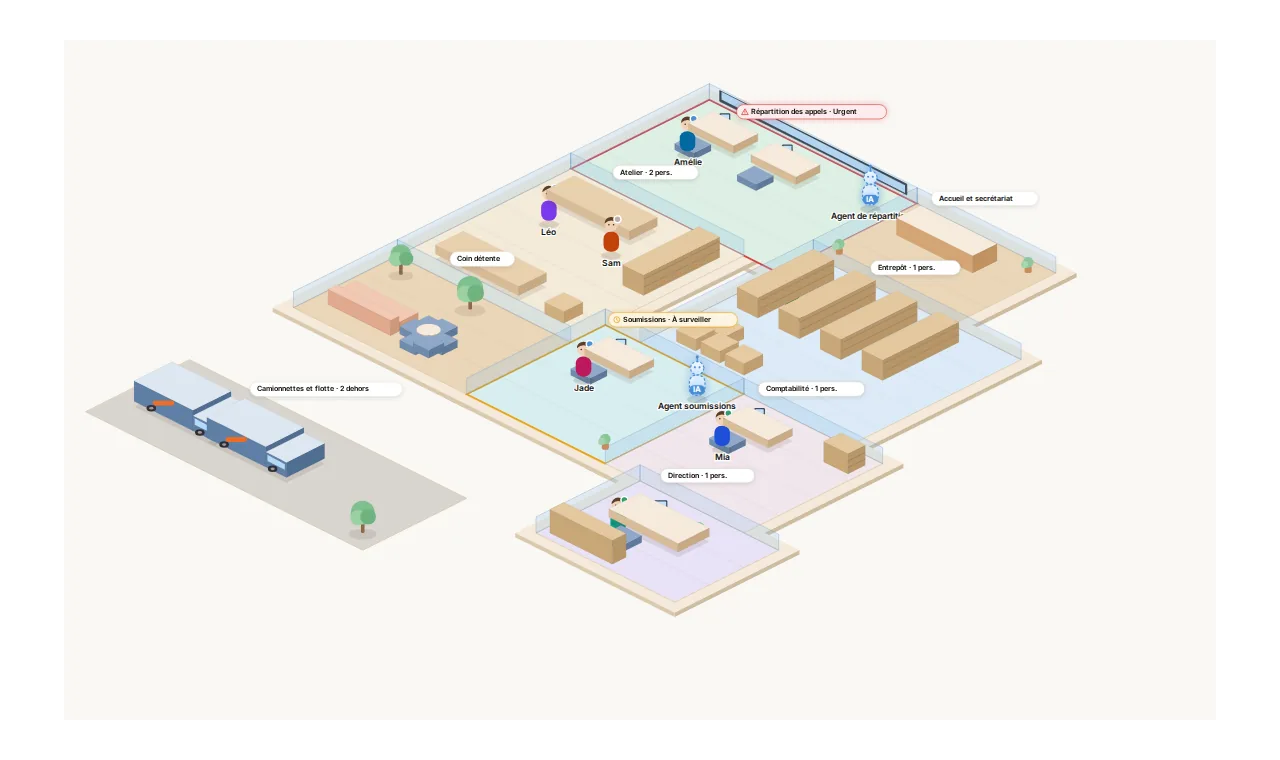
Your whole business, on one screen.
Each department is a room. Pilotiko prepares the work; you approve with one click.
- Call answered
- Appointment confirmed
- Email reply ready
- Invoice prepared