
Privacy officer: who is it in a Quebec business, and what do they do?
In many small businesses, it's the owner without realizing it. Here's what the role involves day to day.
In Quebec, the person in charge of the protection of personal information, often called the privacy officer, makes sure a business complies with the private-sector privacy Act. By default it's the person with the highest authority, who may delegate the role in writing. The officer's title and contact information must be published on the business's website.
30 days free, no credit card.
In short
- The role comes from section 3.1 of Quebec's Act respecting the protection of personal information in the private sector.
- Delegation must be in writing, in whole or in part; the top executive stays accountable.
- The officer approves policies, answers access requests within 30 days and is consulted on every PIA.
- You don't have to notify the Commission d'accès à l'information of the appointment.
Who is the privacy officer if nobody was named?
The statute settles it. Under section 3.1, the person exercising the highest authority within the business sees that the Act is implemented and complied with, and exercises the function of person in charge of the protection of personal information; that person may delegate all or part of the function, in writing, to anyone [1]. In a small business of 5 or 50 people, that means the president, sole owner or general manager until a written document says otherwise.
Quebec's privacy regulator adds three useful points (in French): delegate to someone with the right skills and real decision-making power; the top executive remains accountable after delegating; and the delegate must get the human, technical and financial resources the job needs. The regulator does not need to be told who was appointed [2].
The idea isn't unique to Quebec. Accountability is the first of the ten fair information principles in the federal PIPEDA, which applies to many businesses outside Quebec and to data crossing provincial borders [3].
| Duty | Basis | Example in a service business |
|---|---|---|
| Approve governance policies and practices for personal information | s. 3.2 | Sign off on when old customer files get destroyed |
| Be consulted from the start of every PIA and suggest measures | ss. 3.3, 3.4 | Weigh in before buying new booking software |
| Answer access and correction requests in writing | s. 32 | Send a customer a copy of their file within 30 days |
| Handle data portability requests | Regulator's page | Export a customer's history in a structured format |
| Handle requests to stop dissemination or de-index | Regulator's page | Take down a job-site photo where a customer is recognizable |
| Be reachable by the public | ss. 3.1, 8 | Contact details on the website; provided on request at collection |
Sources: CQLR c. P-39.1 and the Commission d'accès à l'information's page on business responsibilities.
What happens when an access request comes in?
It's the most visible part of the job. Section 32 calls for a written reply, promptly and no later than 30 days after the request is received; silence past that point counts as a refusal [1]. The regulator adds that the officer must search thoroughly for the information requested, help the requester narrow a vague request, and give reasons for any refusal, citing the provision relied on [2].
In practice, log every request the day it arrives, with its date of receipt. A request emailed on a Friday in late July can lose half its window to the construction holiday if nobody notices it.
How much time does the role take in a small business?
Which privacy officer mistakes should you avoid?
- Delegating by word of mouth; the Act requires writing.
- Naming someone with no authority or set-aside time, then leaving them alone with requests.
- Publishing a title with no usable contact details, or an inbox nobody reads.
- Forgetting to update the website when the officer leaves.
- Treating it as an IT job; technical security is only one piece of the role.
Can Pilotiko act as your privacy officer?
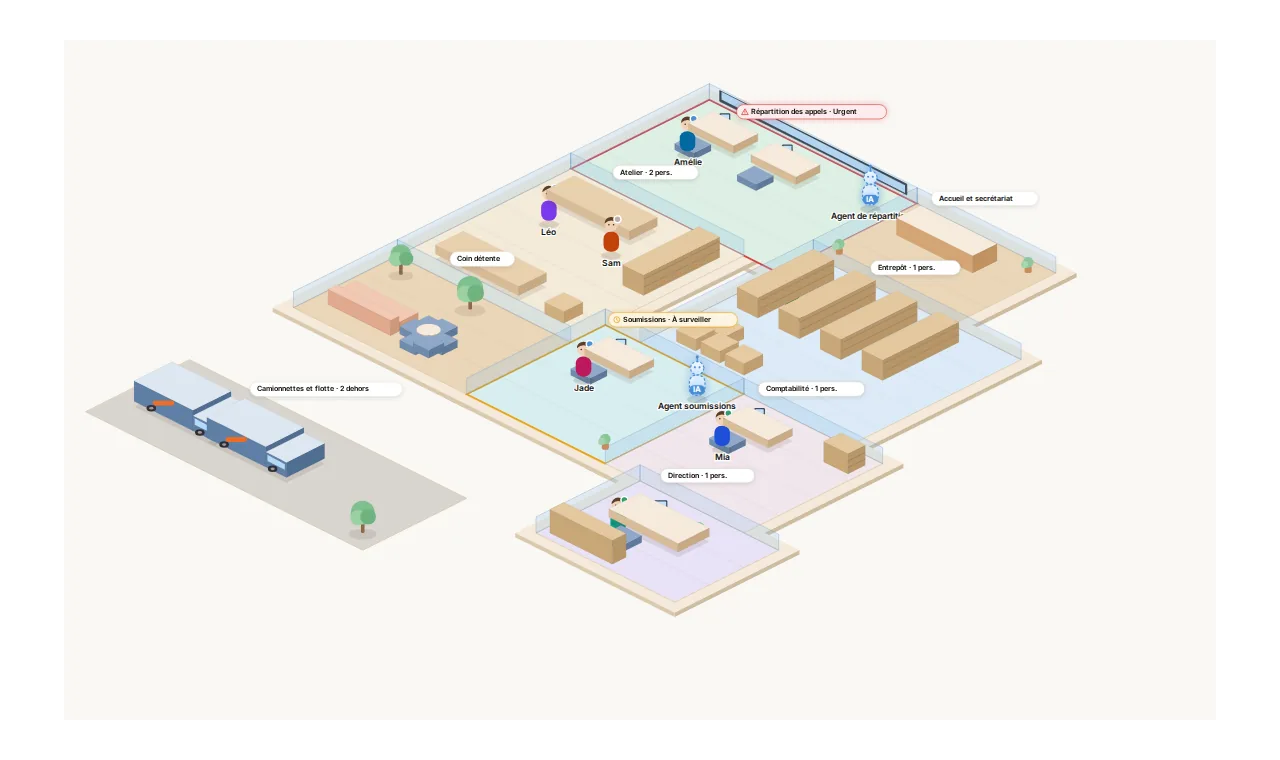
No. The law places the role inside the business, and a software vendor can't hold it for you. Pilotiko can help with organization: the virtual office surfaces urgent items in the right room, which helps keep a request from sitting for 30 days. For the full picture, see our Law 25 page and our Law 25 guide for service businesses.
Frequently asked questions
Does a small business have to appoint a privacy officer?
The role exists automatically: without a written delegation, it's the person with the highest authority. Appointing someone else is a choice, not a requirement.
Can an outside person be the privacy officer?
The Act allows delegation to any person, in writing. The regulator recommends someone with the skills and real decision-making power, and the top executive stays accountable.
Where should the officer's contact details go?
On the business's website, with the officer's title. Without a website, make them available by another appropriate means, such as a notice at the counter.
Do I have to publish the officer's name?
The Act asks for the title and contact information. A title such as “Privacy Officer” with a dedicated email address meets that wording even without a name.
Does the officer approve the privacy policy?
Section 3.2 requires the officer to approve the business's governance policies and practices for personal information. The privacy policy on your website flows directly from them.
Sources
- LégisQuébec, Act respecting the protection of personal information in the private sector (CQLR, c. P-39.1) (accessed on October 15, 2026).
- Commission d'accès à l'information du Québec, Responsabilité des entreprises : responsable de la protection des renseignements personnels (accessed on October 15, 2026).
- Office of the Privacy Commissioner of Canada, PIPEDA requirements in brief (accessed on October 15, 2026).
Read next
- Quebec Law 25: what changed for small businesses?Quebec's Law 25 explained for small service businesses: the person in charge, consent, incidents, automated decisions, penalties and a costed starter checklist.
- Privacy impact assessment: when must a Quebec business do one?Privacy impact assessments for Quebec businesses: when the law requires one (ss. 3.3 and 17), the regulator's six steps, and a time estimate for new software.
- Personal information: what counts, and what doesn't?What counts as personal information in Quebec: the legal definition, sensitive information, business contact details, inferred data and a form review.
- Cookie consent: when do you need to ask first?Cookie consent in Quebec: cookie types, section 8.1 of the private-sector privacy law, profiling off by default, and a cookie inventory for a service business.
- SME: what is a small and medium-sized enterprise?What counts as an SME in Canada and Quebec: federal and Quebec definitions compared, the December 2024 Quebec figures and the classification mistakes to avoid.
- Quebec's Law 25: what a service business must do, section by sectionPrivacy officer, consent, vendors, incidents, retention and penalties: Quebec's Law 25 explained section by section for small service businesses in Quebec.
Your whole business, on one screen.
Each department is a room. Pilotiko prepares the work; you approve with one click.
- Call answered
- Appointment confirmed
- Email reply ready
- Invoice prepared