

Pilotiko feature : available
Keyword cannibalization: are your pages competing with each other?
Two pages chasing the same thing don't make twice the noise. They split the signal.
Keyword cannibalization happens when several pages on the same site target the same query and the same intent. Signals such as links, clicks and impressions get spread across those pages, and the search engine may show a version you wouldn't have picked, or swap between them. The fix is to merge, redirect or genuinely differentiate the pages.
30 days free, no credit card.
In short
- The problem comes from pages serving the same intent, not from sharing a word.
- Microsoft describes clicks, links and impressions being diluted across copies.
- Google: duplicate content doesn't trigger a manual action, but it's inefficient.
- Usual fixes: merge with a permanent redirect, a canonical tag or a rewrite.
What does keyword cannibalization look like in practice?
Picture a renovation company that publishes “Bathroom renovation in Laval” and, two years later, “Our bathroom remodelling services”. Both pages describe the same service, for the same audience, in nearly the same words. When someone searches “bathroom renovation Laval”, the engine has to choose between them.
A post from Microsoft's Bing Webmaster team sums up the effect: when several URLs carry the same content, signals such as clicks, links, impressions and engagement are divided instead of strengthening one high-performing page, and the engine has to guess which one to show [1]. The same post recommends content audits to catch pages that unintentionally compete for the same intent and consolidate them [1].
Is cannibalization a penalty?
No. Google's SEO Starter Guide is clear that having content reachable through several URLs isn't a policy problem; it's inefficient, but it doesn't lead to a manual action [2]. The same guide notes that search engines pick one URL, the canonical, to show for a given piece of content [2].
So the cost is indirect: a page weaker than it could be, an outdated version showing up instead of the right one, and crawl time wasted on duplicates. Microsoft adds that AI systems tend to group near-identical pages and keep just one, not necessarily the one you'd prefer [1].
How do you spot cannibalization in Search Console?
Open the Performance report, filter on a single query, then switch to the Pages tab [4]. If two or more URLs earn impressions for that query and their average positions see-saw from week to week, that's a classic sign. Repeat for your ten most important queries.
Then check intent. If one page explains pricing and the other takes bookings, they can coexist. If they say the same thing, one of them is surplus.
| Situation | Fix | Expected effect |
|---|---|---|
| Two nearly identical pages | Merge into the stronger one and 301-redirect the other | One URL collects links and clicks |
| A variant that must stay live (campaign, print version) | Canonical tag pointing to the main page | The engine knows which version to show |
| Two pages aimed at different intents | Rewrite titles and copy to sharpen the difference | Each page answers its own query |
| A useful but competing secondary page | Clear internal link to the main page | A hierarchy people and crawlers can read |
Google recommends permanent redirects only when you're retiring a duplicate page, and internal links that point to the canonical URL [3].
What does a page merge look like in numbers?
Which cannibalization mistakes should you avoid?
- Seeing cannibalization everywhere; two pages showing up for a marginal query aren't necessarily a problem.
- Deleting a page without a redirect, which throws away its links and history.
- Using noindex to pick between two pages; Google advises against it for choosing a canonical within a site [3].
- Leaving internal links pointing at the old page after the merge.
- Writing a new page on a topic you already cover instead of updating the existing one.
What does Pilotiko do about cannibalization?
Pilotiko doesn't advertise a tool that automatically detects cannibalization in your search data. For the site it hosts, it generates the sitemap and structured data, and an audit of your current site is available. A clear structure built around one pillar page per major topic also lowers the odds of duplicates. For the canonical side of things, see our entry on the canonical tag.
Frequently asked questions
How can I tell whether two of my pages are cannibalizing each other?
In Search Console, filter the Performance report on one query and open the Pages tab. Several URLs earning impressions for the same query and intent is a signal worth checking.
Does cannibalization drag down the whole site?
Google says duplicate content doesn't result in a manual action. The effect is narrower: the pages involved end up weaker than a single, consolidated page would be.
Should competing pages always be merged?
No. If they serve different intents, sharpen the difference instead. Merging fits when they say essentially the same thing.
Is a canonical tag enough?
It works when the variant has to stay reachable, like a campaign page. If the page no longer has a reason to exist, a permanent redirect is clearer for everyone.
How long before a merge shows results?
Search engines need to recrawl the pages and process the redirect. Allow several weeks and compare equal-length periods in Search Console.
Sources
- Microsoft Bing Blog, Does Duplicate Content Hurt SEO and AI Search Visibility? (accessed on October 15, 2026).
- Google Search Central, SEO Starter Guide (accessed on October 15, 2026).
- Google Search Central, How to specify a canonical URL with rel="canonical" and other methods (accessed on October 15, 2026).
- Search Console Help (Google), Performance report (Search results): overview and basic setup (accessed on October 15, 2026).
Read next
- Canonical tag: how do you point Google to the right version of a page?A canonical tag tells Google which URL to prefer among duplicate pages. The methods, how strong each signal is, a worked URL count and the usual mistakes.
- Search intent: what does the searcher actually want?Search intent explained: the Know, Do, Website and Visit-in-person intents Google describes, a Quebec service-business example and the mistakes to avoid.
- Internal linking: why link your own pages to each other?Internal linking connects the pages of one website. What Google says about crawlable links, anchor text and orphan pages, plus a worked small business audit.
- Search Console impressions: what exactly gets counted?What a Search Console impression really counts: display rules, carousels, property versus page aggregation, and a seasonal example with figures.
- Google Search Console: what is Google's free site tool for?Google Search Console explained: what the free tool does, how to verify your site, which reports to open each month and the mistakes small businesses make.
- Pillar page: what is a page that covers a whole topic for?The pillar page explained: an in-depth page covering a broad topic and linking to detailed pages. Typical structure, a worked example and common pitfalls.
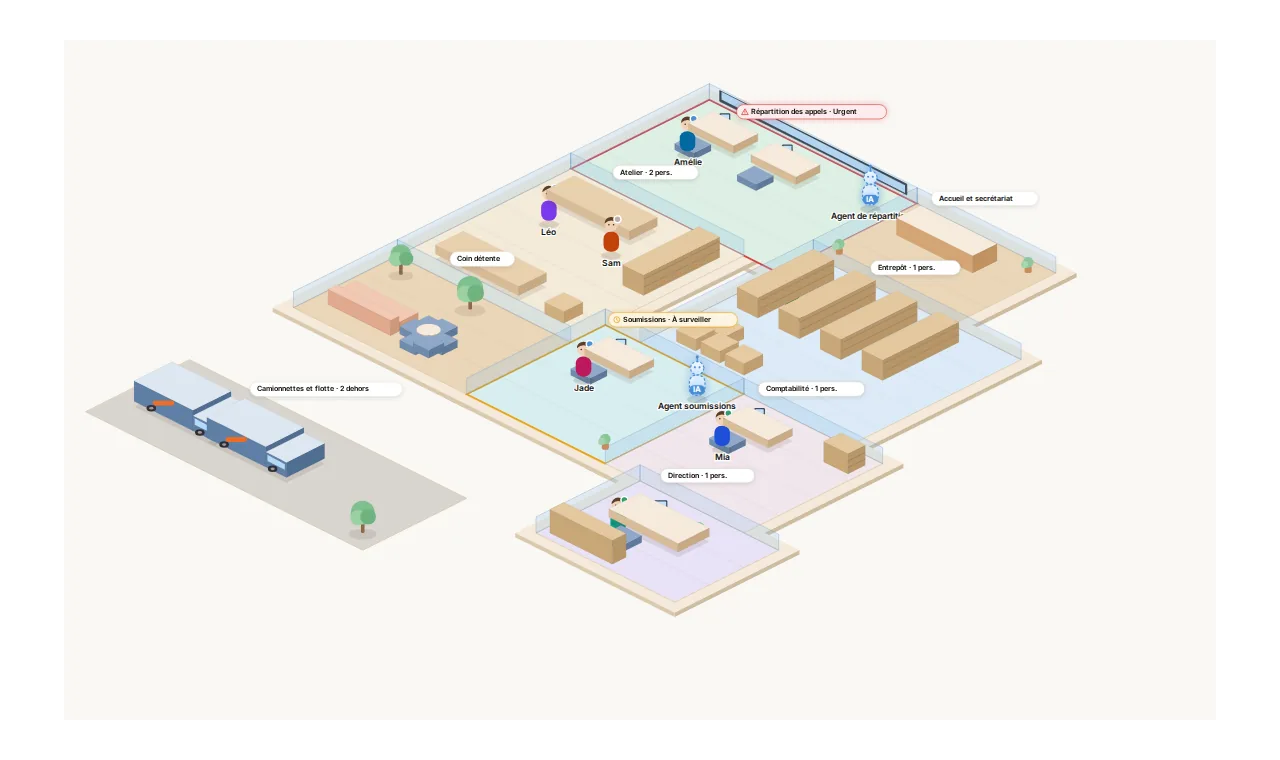
Your whole business, on one screen.
Each department is a room. Pilotiko prepares the work; you approve with one click.
- Call answered
- Appointment confirmed
- Email reply ready
- Invoice prepared