
Pilotiko feature : available
Search intent: what does the searcher actually want?
The words typed are a clue. The goal behind them decides which page is the right answer.
Search intent is the goal behind a query: learning something, getting a task done, reaching a particular website or finding a place to visit. Search engines try to infer it before ranking results, so a page that serves that goal directly stands a better chance of being judged useful than one that merely repeats the query's words.
30 days free, no credit card.
In short
- Google says it first works out “the intent behind your query”.
- Its rater guidelines describe Know, Do, Website and Visit-in-person queries.
- One query can carry several intents at once.
- One page per clear intent beats a page that tries to cover everything.
How does Google talk about search intent?
On its page about ranking results, Google says that to return relevant results it first needs to establish what you're looking for: the intent behind your query. It adds that the language-model system built for this took over five years to develop and significantly improves results in over 30% of searches across languages [1].
Google also gives concrete cues. Words like “cooking” or “pictures” point toward recipes or images, and a query like “pizza” is understood as local, so nearby businesses come up [1].
What are the main types of intent?
The guidelines Google gives its search quality raters (Search Quality Rater Guidelines, section 12.7) suggest thinking of every query as carrying one or more intents [2].
| Type | What the searcher wants | Service-business example |
|---|---|---|
| Know | To learn about or explore a topic | “why does my heat pump freeze in winter” |
| Know Simple | A short, correct and complete answer | “minimum balcony railing height” |
| Do | To accomplish a goal or task | “book dog grooming appointment” |
| Website | To reach a specific site or page | “[company name] online invoice” |
| Visit-in-person | To find a place to go | “auto repair open Saturday near me” |
Categories from Google's Search Quality Rater Guidelines; examples are Pilotiko's.
Can one query have several intents?
Yes, and it happens all the time. Google's document has a subsection on queries with multiple user intents and separates the dominant interpretation (what most people mean), common interpretations and minor ones [2]. A query like “duct cleaning” could be about price, how the job is done, how often it's needed, or a company to call right now.
Microsoft points out that AI systems lean on intent too: when several pages on one site cover the same topic in similar words, those systems struggle to tell which page best matches the searcher's intent, so the page you prefer is less likely to be picked [3]. That is the root of keyword cannibalization.
How do you match a page to each intent?
Which search-intent mistakes should you avoid?
- Answering a Do query (“book”) with a long blog post that has no booking button.
- Answering a Know Simple query with a wall of text; the answer belongs in one or two sentences at the top.
- Overlooking local queries when your Google Business Profile is often the real answer.
- Writing two pages for the same intent that end up competing with each other.
- Judging a page on traffic alone; a Do page is better measured by its conversion rate.
What does Pilotiko do about search intent?
When Pilotiko builds and hosts your site, service pages, online booking and the FAQ live on separate pages, which helps keep one intent per page. Content drafting, available today, prepares copy that you approve before anything goes live. For an answer-first approach, see AEO and the local SEO guide for Quebec.
Frequently asked questions
What are the 4 types of search intent?
Google's rater guidelines talk about Know (learn), Do (act), Website (reach a site) and Visit-in-person (go somewhere) queries. Marketers often use other labels, such as informational, transactional and navigational, for similar ideas.
How can I tell a query's intent?
Search it yourself and look at the kind of pages the engine puts first. If they're guides, the dominant intent is to learn; if they're business listings with a map, it's local.
Is search intent a ranking factor?
Google says it first tries to understand the intent behind a query when choosing results. A page that doesn't match that intent is unlikely to be judged relevant, even if it contains the right words.
Can one page serve several intents?
It can handle closely related ones, such as learning about a service and then booking it. Mixing very different intents on one page muddies the message for both people and search engines.
Does intent change over time?
Yes. A query tied to a product or to current events can shift its dominant meaning, and Google's guidelines acknowledge this. Review your main pages at least once a year.
Sources
- Google (How Search Works), How Google Search organizes and ranks results (accessed on October 15, 2026).
- Google, Search Quality Rater Guidelines (section 12.7, Understanding User Intent) (accessed on October 15, 2026).
- Microsoft Bing Blog, Does Duplicate Content Hurt SEO and AI Search Visibility? (accessed on October 15, 2026).
Read next
- Long-tail keyword: why do specific searches matter?Long-tail keywords explained: long, specific queries, how to find them in Search Console and a worked example for a Quebec service business, with figures.
- Local SEO: how do nearby customers find you?Local SEO explained: Google's relevance, distance and prominence factors, a service-area calculation for a Quebec small business, and costly mistakes.
- What is a Google Business Profile?What a Google Business Profile is, how Google ranks local listings, the rules for name, address and phone, and a worked example for a Quebec service business.
- Keyword cannibalization: are your pages competing with each other?Keyword cannibalization explained: when your own pages compete for one query, how to spot it in Search Console and how to merge pages without losing traffic.
- Conversion rate: how do you calculate it properly?Conversion rate explained for service businesses: the formula, the stages worth tracking, a renovation example from Sherbrooke and the traps that skew it.
- AEO: what is answer engine optimization?Answer Engine Optimization explained: what AEO covers, what Google actually says about answers, and a worked FAQ page example for a Quebec service business.
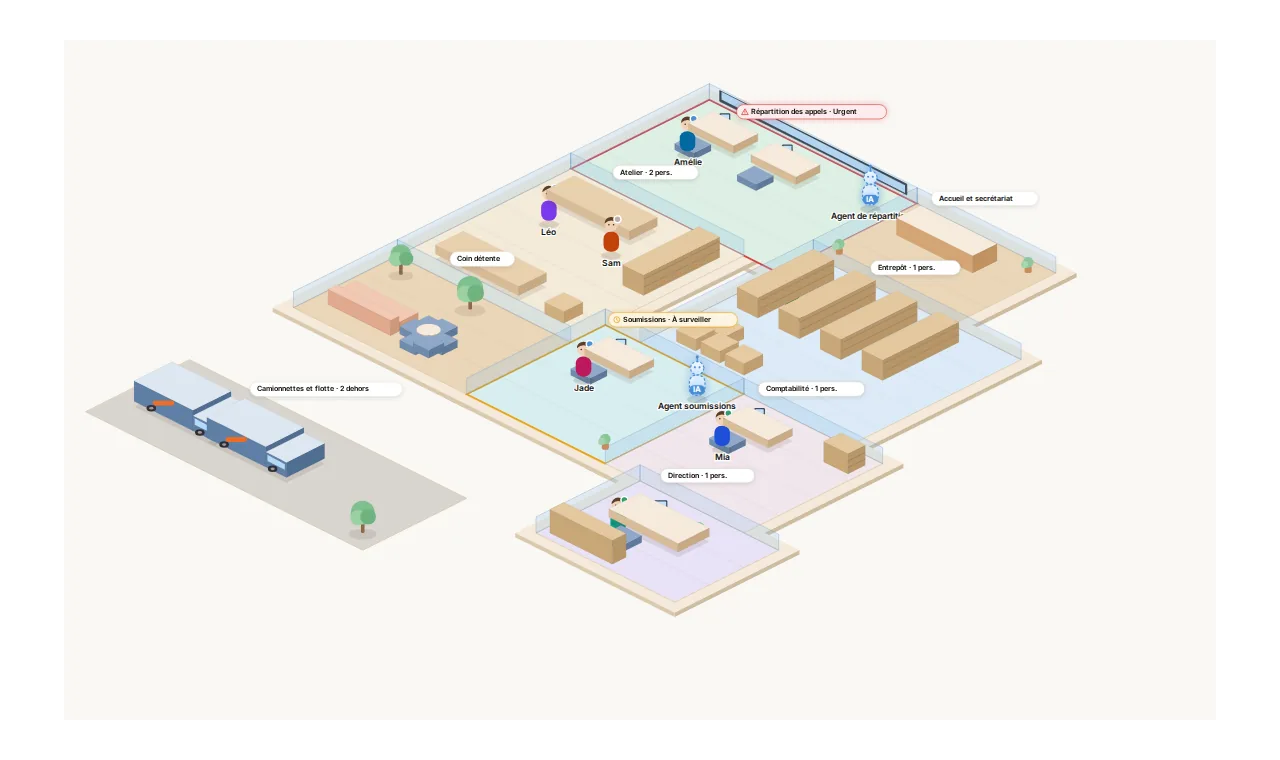
Your whole business, on one screen.
Each department is a room. Pilotiko prepares the work; you approve with one click.
- Call answered
- Appointment confirmed
- Email reply ready
- Invoice prepared