
Pilotiko feature : available
Google Search Console: what is Google's free site tool for?
The only official window on how Google sees your website.
Google Search Console is a free Google service that lets a site owner confirm Google can crawl and index the site, see which queries it appears for along with clicks and impressions, and get alerts when something goes wrong. Signing up isn't required to appear in Google Search, but it shows you how Google sees your site.
30 days free, no credit card.
In short
- Free; you need a Google account and an up-to-date browser.
- You must prove you own the site (verification).
- A Domain property covers http, https and every subdomain, and is verified through DNS.
- Google suggests checking in roughly once a month.
What can you do with Search Console?
Google describes it as a free service that helps you monitor, maintain and troubleshoot your site's presence in Google Search results [1]. You don't have to sign up to be included in Google Search, but the tool helps you understand and improve how Google sees your site [1].
In practice, Search Console lets you confirm Google can find and crawl the site, fix indexing problems and request recrawls, view search traffic data (queries, impressions, click-through rate), receive alerts and see which sites link to yours [1].
| Report | Question it answers | Suggested frequency |
|---|---|---|
| Performance (Search results) | Which queries am I seen and chosen for? | Monthly |
| Indexing (index coverage) | Which pages are indexed, or not, and why? | After every redesign |
| Sitemaps | Has my sitemap been read? | On submission, then as needed |
| Manual actions | Is Google taking action against my site? | After a sudden drop |
| Rich result status | Can Google read my structured data? | After a markup change |
Reports described by Google Search Central; frequencies are Pilotiko's suggestion, except the monthly check-in Google proposes [3].
How do you verify your site?
Verification proves to Google that you own the site, and a verified owner gets the highest level of permissions [2]. Google accepts several methods: uploading an HTML file, adding an HTML tag to the home page, using an existing Google Analytics or Google Tag Manager snippet, going through Google Sites or Blogger, or adding a record with your domain name provider [2].
The property type matters. A Domain property (example.com) includes every protocol variant (http and https) and every subdomain, but can only be verified through your domain name provider with a DNS TXT or CNAME record [2]. A URL-prefix property (https://example.com) covers addresses starting with that prefix and accepts the other methods.
Several people can verify the same site, and adding more than one method is wise: if a template change wipes out the tag, the other method keeps you verified [2]. If your only verified owner leaves the business, you'll need to verify again to keep access [2].
Where should you start once the site is verified?
Google suggests three steps: make sure Google can find and read your pages (index coverage), consider submitting an XML sitemap, which can speed up discovery even though Google can find pages without one, then monitor performance [3]. You don't need to log in every day; Google emails you when it detects an issue and recommends checking the account about once a month or after content changes [3].
Which Search Console mistakes should you avoid?
- Letting your web agency verify the site under its own account, then losing access when you switch providers.
- Creating only an https://www.example.com property and missing data for example.com without www.
- Assuming a query listed in the report means you'll see your site when you search it; Google says results vary with time, location, device and history [4].
- Panicking over a one-day dip; the newest data can be preliminary [4].
- Sharing the report and thinking you've given full access; the Share button only exposes the current view [4].
What does Pilotiko do with Search Console?
Search Console belongs to Google and is set up under your own account; Pilotiko doesn't replace it. For the site it builds and hosts, Pilotiko generates the sitemap, robots.txt, llms.txt and structured data, which Search Console then lets you check. Also consider Bing Webmaster Tools, which can import your verified sites, and our guide to measuring your AI visibility.
Frequently asked questions
Does Search Console cost anything?
No, it's a free Google service. You need a Google account, a current browser with cookies and JavaScript enabled, and a way to prove the site is yours.
Do I need Search Console to show up on Google?
No. Google says signing up isn't required to be included in its results. The tool helps you understand how Google sees your site and fix problems.
What's the difference between Search Console and Google Analytics?
Search Console shows what happens before the visit: queries, impressions, clicks and indexing. Google Analytics measures what visitors do once they're on the site. They complement each other.
My site runs on a hosting platform. Can I still verify it?
Yes, but some methods, such as uploading an HTML file, aren't always possible on those platforms. Verifying through your domain name provider is often the sturdiest option.
How long before I see data?
Collection starts as soon as the property is added, even before verification. Expect a few days before data starts to build up.
Sources
- Search Console Help (Google), About Search Console (accessed on October 15, 2026).
- Search Console Help (Google), Verify your site ownership (accessed on October 15, 2026).
- Google Search Central, Get started with Search Console (accessed on October 15, 2026).
- Search Console Help (Google), Performance report (Search results): overview and basic setup (accessed on October 15, 2026).
Read next
- Search Console impressions: what exactly gets counted?What a Search Console impression really counts: display rules, carousels, property versus page aggregation, and a seasonal example with figures.
- Click-through rate (CTR): how do you calculate and read it?Click-through rate in search: the clicks ÷ impressions formula, where to read it in Search Console and why a low CTR isn't always bad news for a business.
- XML sitemap: what does it do for search engines?What an XML sitemap is, which tags it uses, the official 50,000-URL limit, whether a small business site needs one and the mistakes that confuse search engines.
- Bing Webmaster Tools: why bother with Bing as well?Bing Webmaster Tools explained: what Microsoft's free tool does, importing from Google Search Console, the AI Performance report and the pitfalls to watch for.
- Structured data: what are schema.org and JSON-LD?Structured data, schema.org and JSON-LD explained: formats Google accepts, a LocalBusiness markup example for a Quebec small business and the usual mistakes.
- SEO: what is search engine optimization?What SEO really covers, how Google finds and ranks pages, a worked example for a Quebec service business and the mistakes that quietly cost visibility.
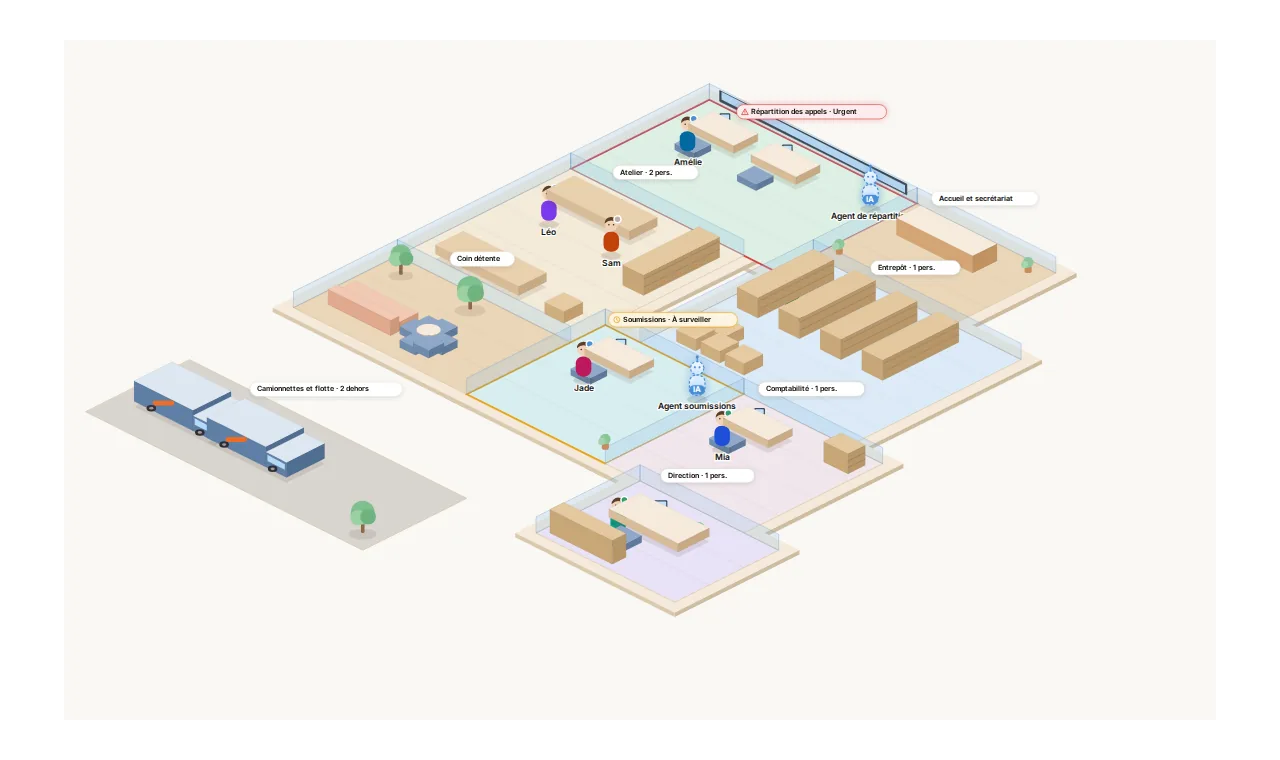
Your whole business, on one screen.
Each department is a room. Pilotiko prepares the work; you approve with one click.
- Call answered
- Appointment confirmed
- Email reply ready
- Invoice prepared