
Pilotiko feature : available
404 error: what should you do when a page on your site can't be found?
A broken link is no disaster for Google. For the customer hunting for your phone number, it is another story.
A 404 (Not Found) error is an HTTP response code meaning the server can't find the requested resource. It usually follows a mistyped address or a page moved without a redirect. Google doesn't index URLs that return 404 and gradually drops those it had indexed; for visitors, it is a dead end you should make useful.
In short
- 404 says “missing” without saying whether it is temporary; 410 says “gone for good”.
- Google treats every 4xx error the same way, except 429.
- An already-indexed URL that starts returning 4xx is gradually removed from the index.
- An empty page or error message served with a 200 code is reported as a “soft 404” in Search Console.
- 404s don't affect how fast Google crawls the rest of your site.
Why does a website return a 404 error?
MDN names two common causes: a mistyped URL, and a page that was moved or deleted without a redirect [1]. Links leading there are called broken or dead links [1]. For a small business, the usual story is a redesign: “/services/drain-cleaning.html” becomes “/drain-cleaning/”, yet the old link lives on in a newsletter, a business directory or an old Facebook post.
A 404 only says the resource is missing, not whether that is temporary or permanent [1]. When a removal is deliberate and final, MDN suggests 410 Gone instead; when in doubt, stick with 404 [3].
What does Google do with a 404 page?
Google doesn't use content from URLs that return a 4xx code: it doesn't index them, and those already indexed get removed [2]. Every 4xx error except 429 is handled the same way, and Google gradually crawls those URLs less often [2]. Google also states that these errors have no effect on the site's crawl rate [2].
In other words, a few 404s are normal and don't penalize the whole site. The real cost lies elsewhere: backlinks pointing at a dead page, and visitors who give up.
| Situation | Code sent | Effect in Google |
|---|---|---|
| Page not found, future unclear | 404 Not Found | Not indexed; removed from the index if it was there |
| Page deleted for good | 410 Gone | Same treatment as other 4xx codes |
| Error page served like a normal page | 200 OK | Reported as a soft 404 in Search Console |
| Page moved to a new address | 301 | The new address is kept |
Sources: Google's HTTP status code documentation [2] and MDN [1, 3].
What is a soft 404?
It is a page that tells a human “not found” while telling the crawler “all good”. Google explains that when a 2xx code comes with content suggesting an error, such as an empty page or an error message, Search Console shows a soft 404 error [2]. The classic case is a site that, instead of returning a real 404, sends every unknown address to an “Oops!” page served with a 200 code.
The fix is to return the right code: 404 or 410 if the page no longer exists, or a 301 redirect if an equivalent page does.
How many broken links does a site have after a redesign?
What does a good 404 page look like?
MDN notes that 404s make for a poor visitor experience and that broken links, internal and external, should be kept to a minimum [1]. When someone still lands on an unknown address, the error page should help them carry on: a plain-language message, links to the home page and your main services, your phone number and a way to book.
It should keep the site's look so visitors know they are in the right place and, above all, send a real 404 code to the browser rather than a 200.
Which 404 mistakes should you avoid?
- Redirecting every unknown URL to the home page, which disorients visitors and can look like soft 404s to Google.
- Serving the error page with a 200 code [2].
- Leaving internal links to deleted pages; review your internal linking after every change.
- Keeping URLs that return 404 in your XML sitemap.
- Ignoring 404s that receive links from other sites; those are the best candidates for a redirect.
- Reaching for 410 by reflex when the page might come back; if unsure, MDN recommends 404 [3].
What does Pilotiko do about 404 errors?
The site Pilotiko hosts includes a branded “Page not found” page sent with a genuine 404 code, plus a 410 response for addresses retired on purpose. Pilotiko also generates the site icon that every browser requests, so pages don't trigger a 404 for it. The audit of your current site lists pages returning errors, along with up to five pages on your site that still link to each one; the visibility audit is a good starting point.
Frequently asked questions
Do 404 errors hurt SEO?
Google says 4xx URLs aren't indexed and that these errors don't affect the site's crawl rate. The harm comes mostly from lost visitors and from external links pointing at a dead page.
What is the difference between 404 and 410?
404 says the page can't be found without saying whether that is permanent. 410 says it was removed for good. Google handles both the same way; when unsure, use 404.
What is a soft 404 error?
It is a page showing an error message or empty content while answering with a 200 code, as if all were well. Search Console reports it; fix it by returning a real 404 or a redirect.
Should every 404 be redirected?
No. Redirect old pages that have a clear equivalent and those that still get links or traffic. A page with no equivalent can stay a 404 or become a 410.
How do I find the 404 errors on my site?
An audit tool that crawls your site finds broken internal links and the pages that contain them. Start with your most visited pages and with any URL that other sites link to.
Sources
- MDN Web Docs, 404 Not Found (accessed on October 15, 2026).
- Google (crawling documentation), How HTTP status codes affect Google's crawlers (accessed on October 15, 2026).
- MDN Web Docs, 410 Gone (accessed on October 15, 2026).
Read next
- 301 redirect: how do you move a page without losing visitors?A 301 redirect tells browsers and Google a page has moved for good. When to use it, 301 vs 302, chains to avoid, how long to keep it, and a redesign example.
- Internal linking: why link your own pages to each other?Internal linking connects the pages of one website. What Google says about crawlable links, anchor text and orphan pages, plus a worked small business audit.
- Backlink: what is an inbound link and which ones count?A backlink is a link from another site to yours. What Google counts, which links break its spam policies, how sponsored and ugc work, plus an example.
- Google Search Console: what is Google's free site tool for?Google Search Console explained: what the free tool does, how to verify your site, which reports to open each month and the mistakes small businesses make.
- XML sitemap: what does it do for search engines?What an XML sitemap is, which tags it uses, the official 50,000-URL limit, whether a small business site needs one and the mistakes that confuse search engines.
- Your website, built and hosted by PilotikoPilotiko builds your business website from your real services, checks it, gets your approval, then hosts it with versions and one-click rollback. See the steps.
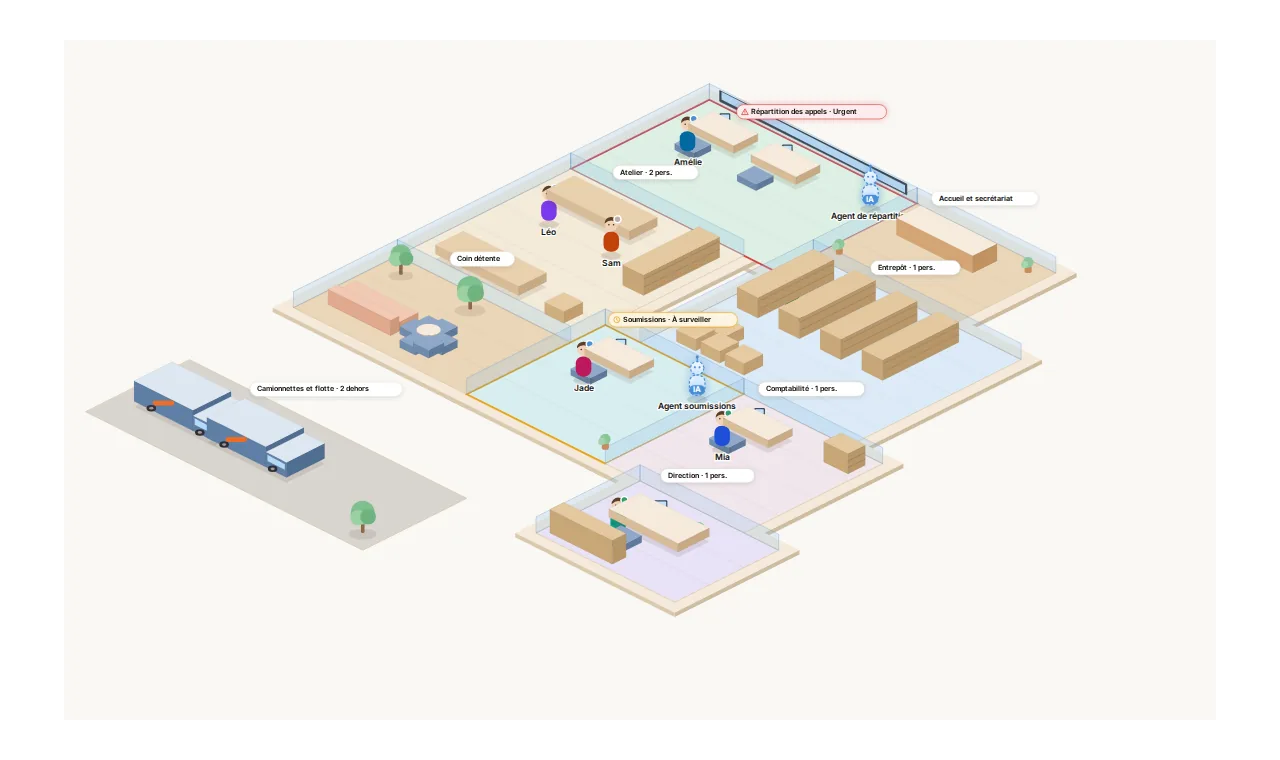
Your whole business, on one screen.
Each department is a room. Pilotiko prepares the work; you approve with one click.
- Call answered
- Appointment confirmed
- Email reply ready
- Invoice prepared